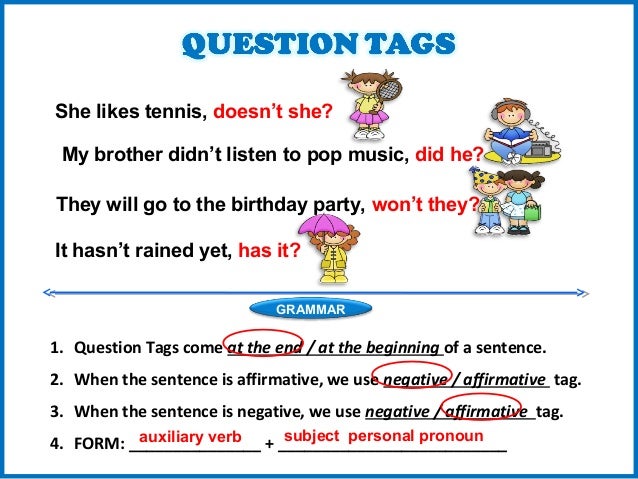
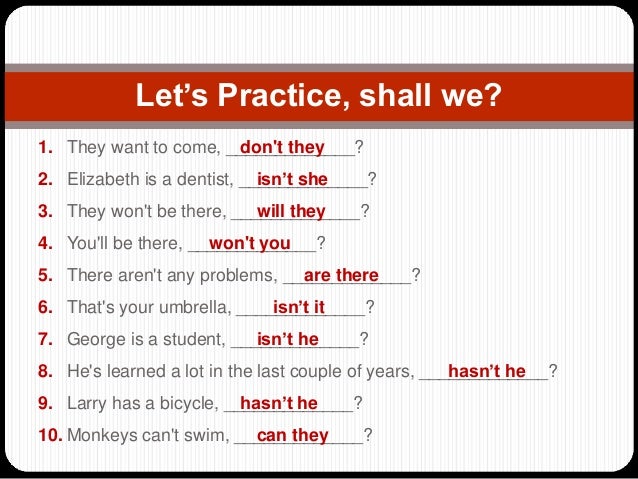
Tag Questions



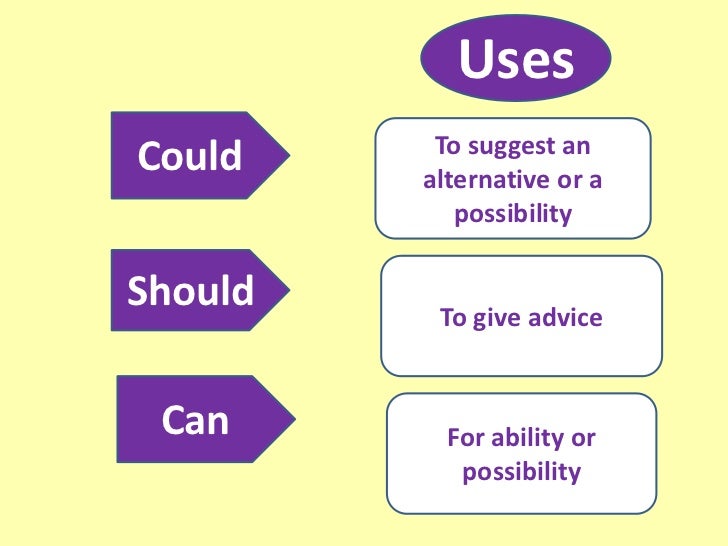
 MODAL VERBS

PRESENT PERFECT


 You can use the Present Perfect to describe your experience. It is
like saying, "I have the experience of..." You can also use this tense
to say that you have never had a certain experience. The Present Perfect
is NOT used to describe a specific event.
Examples:
You can use the Present Perfect to describe your experience. It is
like saying, "I have the experience of..." You can also use this tense
to say that you have never had a certain experience. The Present Perfect
is NOT used to describe a specific event.
Examples:
- I have been to France.
- I have been to France three times.
We often use the Present Perfect to talk about change that has happened over a period of time.
Examples:
- You have grown since the last time I saw you.
- The government has become more interested in arts education.
We often use the Present Perfect to list the accomplishments of individuals and humanity. You cannot mention a specific time.
Examples:
- Man has walked on the Moon.
- Our son has learned how to read.
We often use the Present Perfect to say that an action which we
expected has not happened. Using the Present Perfect suggests that we
are still waiting for the action to happen.
Examples:
- James has not finished his homework yet.
We also use the Present Perfect to talk about several different
actions which have occurred in the past at different times. Present
Perfect suggests the process is not complete and more actions are
possible.
Examples:
- The army has attacked that city five times
-
SIMPLE PRESENT


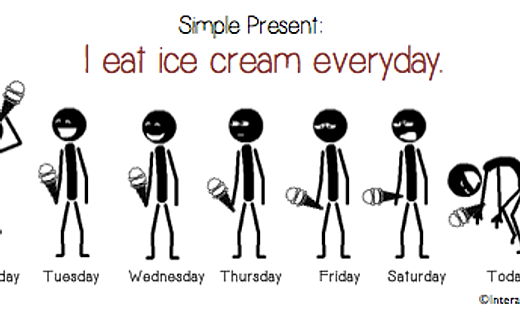 Use the Simple Present to express the idea that an action is repeated
or usual. The action can be a habit, a hobby, a daily event, a
scheduled event or something that often happens. It can also be
something a person often forgets or usually does not do.
Examples:
Use the Simple Present to express the idea that an action is repeated
or usual. The action can be a habit, a hobby, a daily event, a
scheduled event or something that often happens. It can also be
something a person often forgets or usually does not do.
Examples:
- I play tennis.
- She does not play tennis.
- Does he play tennis?
- The train leaves every morning at 8 AM.
The Simple Present can also indicate the speaker believes that a fact
was true before, is true now, and will be true in the future. It is not
important if the speaker is correct about the fact. It is also used to
make generalizations about people or things.
Examples:
- Cats like milk.
- Birds do not like milk.
Speakers occasionally use Simple Present to talk about scheduled
events in the near future. This is most commonly done when talking about
public transportation, but it can be used with other scheduled events
as well.
Examples:
- The train leaves tonight at 6 PM.
- The bus does not arrive at 11 AM, it arrives at 11 PM.
Speakers sometimes use the Simple Present to express the idea that an
action is happening or is not happening now. This can only be done with
Non-Continuous Verbs and certain Mixed Verbs.
Examples:
- I am here now.
- She is not here now.
COVER LETTER
María Fernanda Chacón Salazar.
Tejar del Guarco
Cartago.
February 2, 2015.
Dear Mr. Dr Lopez.
I am writing because
I want to apply for the job of director of the dental clinic. Actually I work
in my clinic, located in Cartago. I have 2 assistants and 10 years experience, I
am a hard worker, I have many patients daily, I teach a course at UCR. I got a
title for my specialty in prosthodontics.
I am very interested in this job,
I need to extend my knowledge and give
help to other dentists. I feel ready for this job.
Call me at 84210061.
Hope to hear from you son.
Thanking you in advance for your attention, I look forward
to your kind reply.
Maria Fernanda Chacon Salazar.
BHUTAN.

https://youtu.be/yZYxZW-3dos
Is a landlocked country in South Asia located at the eastern end of the Himalayas. Bhutan made the transition from absolute monarchy to constitutional monarchy and held its first general election.
The Black Mountains in the central region of Bhutan form a watershed between two major river systems: the Mo Chhu and the Drangme Chhu.
Gross National Happiness
GNH has only been officially used in Bhutan, where a Gross National Happiness Commission is charged with reviewing policy decisions and allocation of resources.
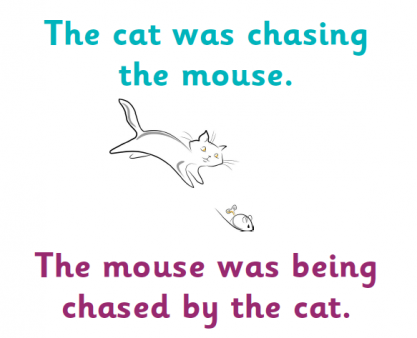
PASSIVE VOICE
Passive voice is used when the focus is
on the action. It is not
important or not known, however, who or what is performing the action.
Example: My bike was stolen.
In the example above, the focus is on the fact that my bike was stolen. I do not know, however, who did it.
Sometimes a statement in passive is more polite than active voice, as the following example shows:
Example: A mistake was made.
In this case, I focus on the fact that a mistake was made, but I do not blame anyone (e.g. You have made a mistake.).
Subject + finite form of
to be + Past Participle
Example: A letter was written.
When rewriting active sentences in passive voice, note the following:
- the object of the active sentence becomes the subject of the passive sentence
- the finite form of the verb is changed (to be + past participle)
- the subject of the active sentence becomes the object of the passive sentence (or is dropped)
Rewriting an active sentence with two objects in passive voice means
that one of the two objects becomes the subject, the other one remains
an object. Which object to transform into a subject depends on what you
want to put the focus on.
Personal Passive simply means that the object of the active
sentence becomes the subject of the passive sentence. So every verb that
needs an object (transitive verb) can form a personal passive.
Example: They build houses. – Houses are built.
Verbs without an object (intransitive verb) normally cannot form a
personal passive sentence (as there is no object that can become the
subject of the passive sentence). If you want to use an intransitive
verb in passive voice, you need an impersonal construction – therefore
this passive is called Impersonal Passive.
Example: he says – it is said
Impersonal Passive is not as common in English as in some other languages (e.g. German, Latin). In English, Impersonal Passive is only possible with verbs of perception (e. g. say, think, know).
Example: They say that women live longer than men. – It is said that women live longer than men.
Although Impersonal Passive is possible here, Personal Passive is more common.
Example: They say that women live longer than men. – Women are said to live longer than men.
The subject of the subordinate clause (women) goes to the beginning
of the sentence; the verb of perception is put into passive voice. The
rest of the sentence is added using an infinitive construction with 'to'
(certain auxiliary verbs and that are dropped).
Sometimes the term Personal Passive is used in English lessons if the indirect object of an active sentence is to become the subject of the passive sentence.


|
|
|
|
|
|